
Concrete Prep 101
Simple, no-nonsense guides for contractors to get the job done right.
The Golden Rule of Tooling
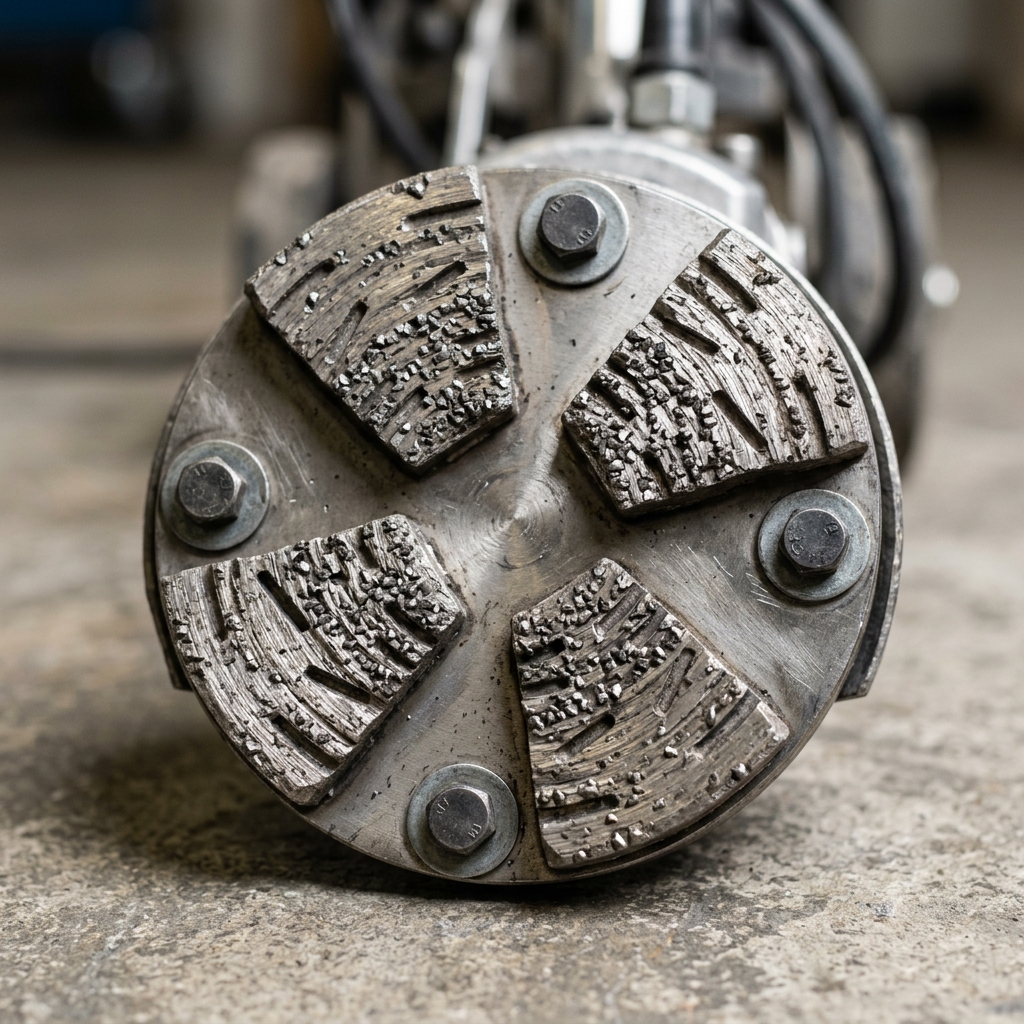
Matching the right metal bond to your floor is the secret to fast, profitable grinding. The rule is simple: use opposites.
- 1. Hard Concrete = Soft Bonds: The bond must melt away to constantly expose fresh, sharp diamonds.
- 2. Soft Concrete = Hard Bonds: Soft floors are abrasive and will destroy soft tooling in minutes. Hard bonds lock the diamonds in place.
- 3. Not sure? Start with Medium bonds.
Quick Test: Scratch the floor with a nail. If it leaves a deep mark easily, it's soft concrete.
The 3-Step Process
A mirror-finish polish doesn't happen overnight. You must follow the progression to remove scratches.
1. Prep (Metals)
Use coarse metal-bond shoes (30/50 grit) to remove old glue and expose the raw concrete aggregate.
2. Hone (Transitional)
Switch to transitional pads (50-100 grit). This erases deep metal scratches and smooths the floor.
3. Polish (Resins)
Run resin pads up to 3000 grit for a brilliant shine. Apply a liquid densifier here to harden the surface.

Protect Your Equipment
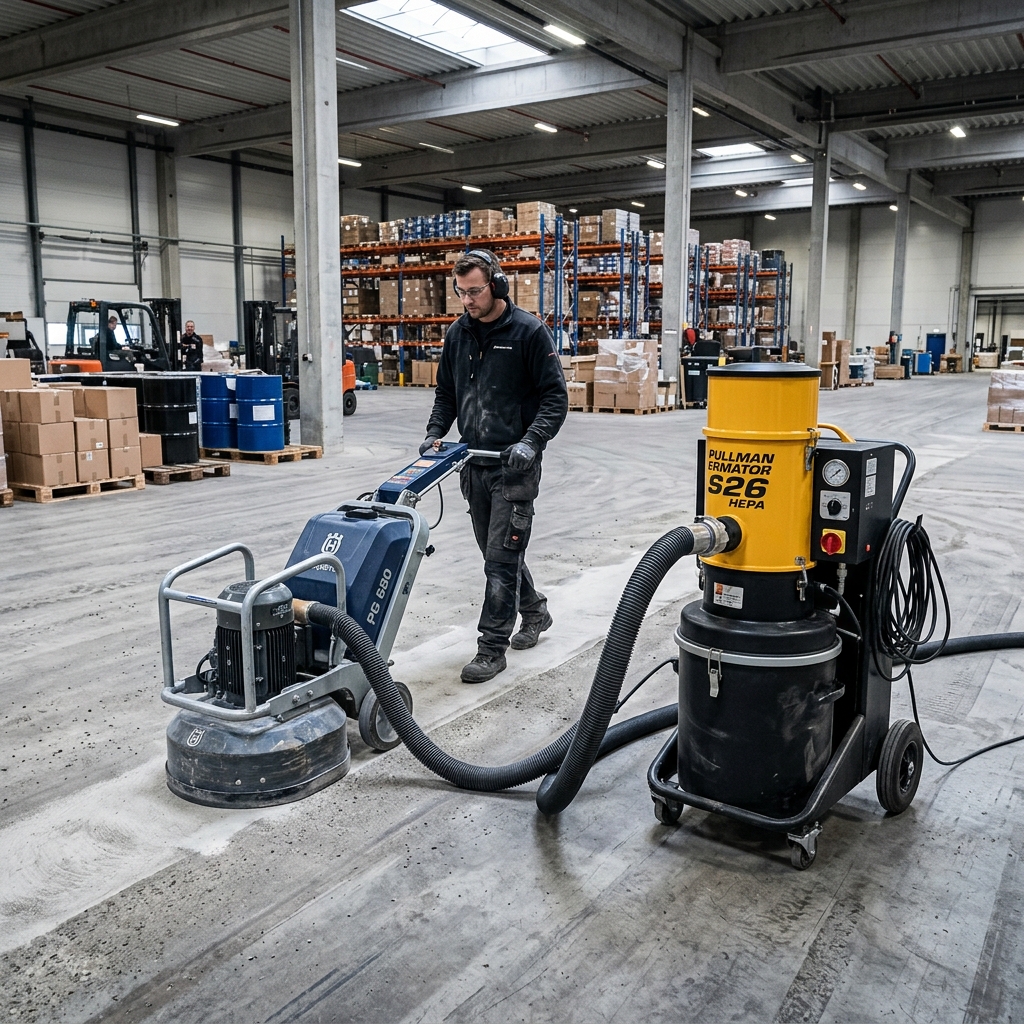
Industrial grinders are massive investments. Keep yours out of the repair shop with these basic rules.
- ✓ Always use a HEPA vacuum: Concrete dust kills motors and clogs gearboxes. Never grind dry without a heavy-duty vac.
- ✓ Check your cords: Thin extension cords cause voltage drops that will fry your grinder's inverter. Only use heavy 10-gauge cords.
- ✓ Don't force the machine: Let the weight and the diamonds do the cutting. Pushing down forcefully will burn out the engine.